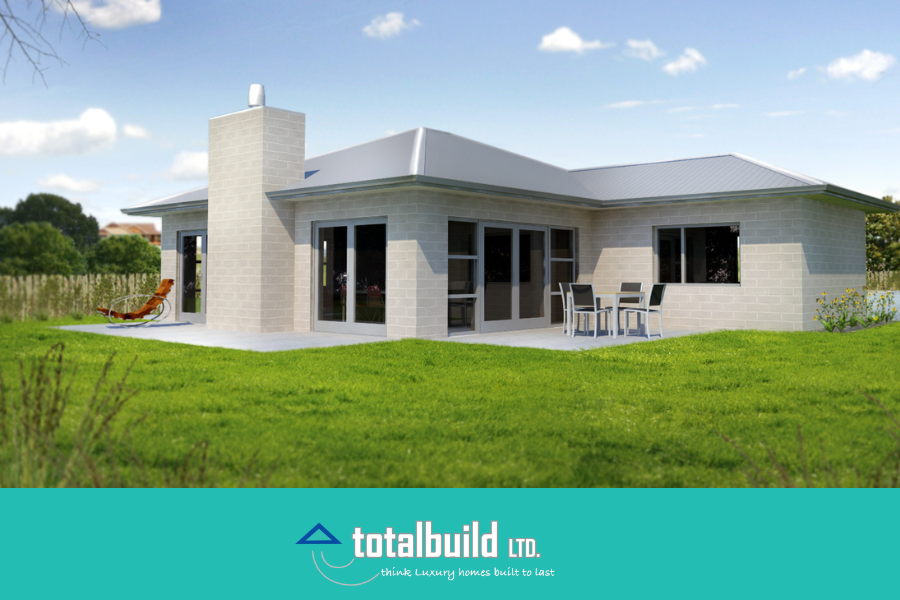
As of January 2026, the Granny Flats Exemption under the Building Act 2004 offers a streamlined pathway for constructing small standalone dwellings in New Zealand. This guidance, issued by the Ministry of Business, Innovation and Employment (MBIE), enables eligible projects up to 70 square metres to proceed without a full building consent, provided strict conditions are met. Designed to address housing shortages, it balances efficiency with safety and compliance. This article provides a detailed overview for homeowners in Auckland and beyond, drawing directly from the official MBIE document to ensure accuracy and reliability.
Understanding the Granny Flats Exemption
The exemption applies to detached, single-storey residential units intended for habitation, such as secondary dwellings for family members or rental purposes. These must comply with the New Zealand Building Code, focusing on structural integrity, durability, health, and safety. Exclusions include multi-storey structures, commercial buildings, or additions that exceed the size limit or fail to meet design criteria.
Key eligibility criteria:
- Maximum floor area: 70 square metres.
- Standalone structure: Not attached to the primary dwelling.
- Residential use only: No garages or non-habitable spaces unless incidental.
Homeowners must assess whether this exemption suits their needs, considering the responsibility for compliance without council-issued code compliance certificates.
For more in depth guide see Granny flats exemption: Guidance and resources
Step 1: Planning and Design Phase
Thorough preparation is essential to mitigate risks and ensure regulatory adherence.
- Site Assessment: Evaluate your property for natural hazards, including flooding, landslides, or seismic activity. Utilize resources such as the Natural Hazards Portal or local council hazard maps. Any identified risks must be addressed in the design to comply with Building Code clauses.
- Suitability Evaluation: Compare the exemption's benefits—such as reduced processing times and costs—against potential drawbacks, including personal liability for defects and limited consumer protections under the Building Act.
- Engaging Professionals: Restricted building work requires Licensed Building Practitioners (LBPs) for design and construction, along with registered plumbers, drainlayers, gasfitters, and electricians. Verify credentials via the LBP register or professional bodies to guarantee expertise.
- Project Information Memorandum (PIM): Submit an application to your territorial authority (e.g., Auckland Council) prior to construction. The PIM will identify hazards, resource consent requirements, and any development contributions. Construction may commence only after issuance, with a two-year completion deadline.
- Design Considerations: Explore design-build contracts or prefabricated options for efficiency. Ensure utilities connect to network operators where available, or incorporate compliant on-site systems. Obtain additional approvals, such as resource consents under the National Environmental Standards for Detached Minor Residential Units (NES-DMRU), if applicable.
Maintain comprehensive records, including plans, specifications, and professional certifications, throughout this phase.
All of this you are going to need some expert help
Step 2: Construction Phase
Execution demands rigorous oversight to uphold standards.
- Process Management: Supervise the build to align with approved plans. Appoint an LBP to lead, ensuring all work adheres to specifications.
- Compliance and Variations: Any changes must be documented and approved by professionals to remain within exemption conditions. Non-compliance may necessitate retrospective consents or enforcement actions.
- Consumer Protections: As the homeowner, you bear responsibility for rectifying issues. Secure detailed contracts with professionals to outline liabilities, warranties, and dispute resolution. You really want a Guarantee in place like the Masterbuild 10 Year Guarantee
- Inspections and Documentation: Professionals will conduct inspections and provide Records of Work (ROWs) for restricted tasks. Retain all quality assurance records.
- Enforcement Risks: Deviations can lead to council interventions, fines, insurance complications, or structural orders. Councils retain authority to monitor and enforce compliance.
Step 3: Completion and Post-Construction
Finalization involves administrative closure to validate the project.
- Documentation Submission: Within 20 working days of completion, provide your council with final plans, ROWs, Certificates of Work (COWs), electrical and gas safety certificates.
- Completion Notification: Inform the council of project finalization to update property records. Note that no formal code compliance certificate is issued under this exemption; professional documentation serves as evidence.
- Development Contributions: Pay any levied fees as indicated in the PIM, supporting local infrastructure.
- Optional Measures: Consider voluntary council inspections or property file updates to facilitate future sales or insurance.
Extensions for completion may be requested if documentation delays occur, but proactive management is advised.
ARE THERE ANY SAVINGS IN COST
Just two components, the Building Consent and Resource Consent
You still need Plans from an LPB Designer.
A PIM which will check you are allowed to build.
Still will be paying Developement Contributions which are generally much higher cost than the Building Consent
All Building must be done by LBP & registered Plumber, Drainlayer , Electrician.